
Big Data to Better Decisions: Leveraging AI and Machine Learning for Chesapeake Bay Research and Management
Moderator
Qian Zhang
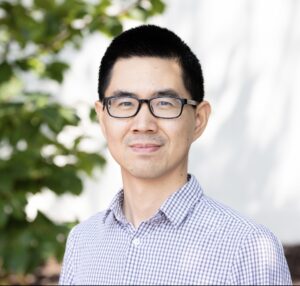 Dr. Qian Zhang is an Associate Research Scientist with the University of Maryland Center for Environmental Science at the Environmental Protection Agency Chesapeake Bay Program. He works with scientists and managers to analyze monitoring data and understand long-term patterns and trends in water quality across the Chesapeake Bay and its watershed. His work combines environmental science with statistics and machine learning to better understand nutrient and sediment pollution and to translate data into practical insights for clean water and healthy ecosystems. Dr. Zhang earned his Ph.D. in Environmental Engineering from Johns Hopkins University. He also holds two master’s degrees from Johns Hopkins University: one in Environmental Engineering and one in Statistics.
Panelists
Victoria Coles
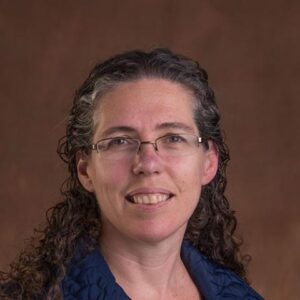
Victoria Coles is a professor at UMCES whose research focuses on understanding the interactions between physical and biogeochemical ocean processes in both coastal and open ocean regimes. She uses both observations and models of coupled systems using strategies that bridge widely varying spatial and temporal scales to better understand how event scale, or individual scale processes influence the dynamics of the whole system. The common theme is how nonlinear interactions between physics, biogeochemistry and ecology are influenced by climate variability.
Her most recent research efforts includes: understanding the physical and ecological impacts of changes in extreme events in the Chesapeake Bay using data and IPCC class model projections; combining Eulerian with Lagrangian and stochastic modeling techniques to allow coupled circulation, biogeochemistry, and ecology models to span large ranges in spatial and temporal scale processes in the Amazon River Plume; and coupling models of ocean currents and biogeochemistry to genes and macroalgae.
Kim Van Meter
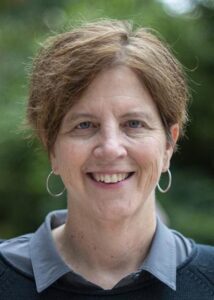 Dr. Kimberly Van Meter is a water system scientist who studies the many ways in which human activity is affecting water quality and water availability across a range of different landscapes. She uses remote sensing, large-scale data analysis, and process-based modeling approaches to explore the influences of climate, land use, and management practices on water quality, especially in large agroecosystems. Her work on the build-up of legacy nutrients in agricultural landscapes has been foundational to developing a new understanding of the long time trajectories needed to improve water quality. Dr. Van Meter is also deeply interested in the effects of a changing climate on the North American Great Lakes, especially with regard to changing water levels and the effects of these changes on Great Lakes coastal wetlands. Recently, she has begun work on a NASA-funded project related to targeted restoration of wetlands in human-impacted landscapes. In this work, she is using a multi-scalar approach to better predict how wetland restoration can increase the removal of excess nutrients and thus reduce downstream nitrate and phosphorus loads. In another project, she is exploring the effects of reservoirs and small mill dams in the Chesapeake Bay Watershed on water quality. She is especially interested in questions related to the effects of aging dam infrastructure and dam removal on downstream water quality. In all of her work, Dr. Van Meter is interested in bettering our understanding of the effects of land-use change on water availability and water quality, and in exploring the sometimes unexpected social and environmental tradeoffs associated with attempts to improve environmental outcomes.
Alison Appling
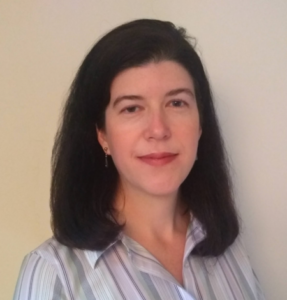
Dr. Alison Appling is a water data scientist with the U.S. Geological Survey. She uses a combination of statistical, theoretical, and knowledge-informed machine learning methods to model water quality in rivers and lakes. She is especially passionate about investigating patterns and drivers of water quality through the development of new, improved, and integrated modeling methods. She also manages water prediction projects, encompassing diverse modeling methods and spanning the water cycle, in support of national and regional water availability assessments. She earned a PhD in Ecology from Duke University and currently lives in State College, Pennsylvania, in the Susquehanna portion of the Chesapeake Watershed.
Admin Husic
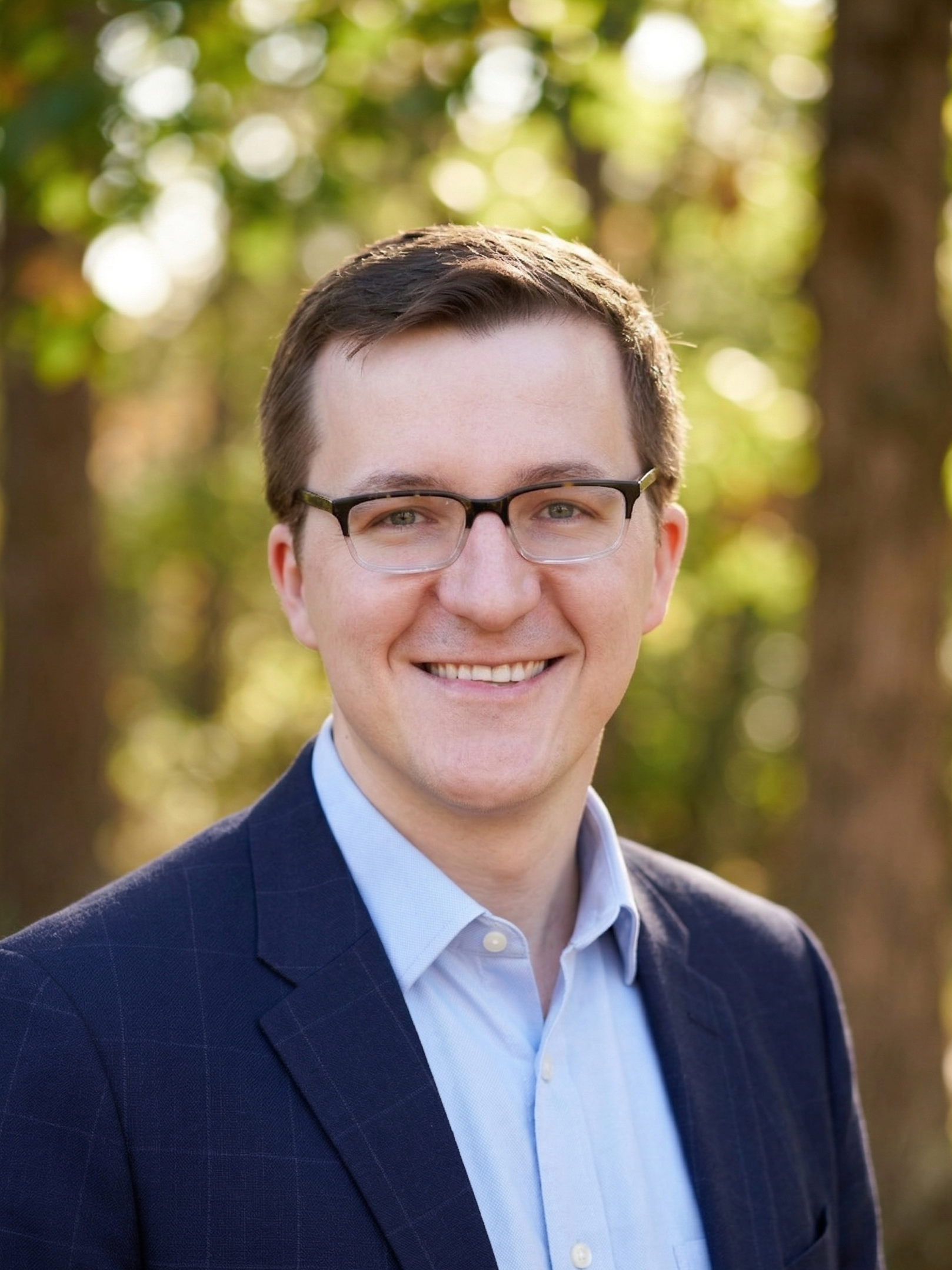
Admin Husic is an associate professor of Civil and Environmental Engineering at Virginia Tech. His team works to advance our understanding of the connectivity and transport of sediment and nutrients in human-disturbed landscapes. His approach to science is that if something exists in a river, he ought to know about it! His team uses tools such as aquatic sensors, geochemical tracers, and deep learning models to solve vexing problems in water resources. The team’s overall goal is to ensure the equitable access and security of water for all people. He received his PhD from the University of Kentucky (2018) and is the recipient of an NSF CAREER Award and NSF Track-4 Fellowship.
Dante Horemans
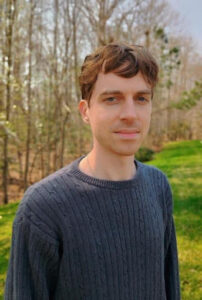 Dante Horemans is based at William & Mary’s Virginia Institute of Marine Science, where he advances environmental forecasting in the Chesapeake Bay by integrating the mechanistic understanding and interpretability of process-based models with the predictive power of AI and machine learning approaches. He has published on topics including harmful algal blooms and habitat suitability modeling for a range of Chesapeake Bay species relevant to fisheries, aquaculture, and recreational anglers. Several of these models are now featured in the Chesapeake Bay Environmental Forecasting System (vims.edu/cbefs), where they contribute to daily environmental forecasts of biogeochemical conditions and ecosystem health in the Bay. Dante also provides advisory support to Chesapeake Bay Program managers on using AI and machine learning to help prioritize areas for water quality improvement, conservation, habitat restoration, and fisheries management.
Hail CESR? Weighing the Benefits of Deep and Shallow Restoration
The May 2023 STAC Comprehensive Evaluation of System Response (CESR) report concluded that meeting the Chesapeake Bay TMDL goals and water quality standards is going to be challenging with achievement in the distant future. A variety of obstacles, including achieving sufficient nonpoint source reduction, must be overcome. It additionally proposed that changes to TMDL implementation could help prioritize water quality investments that have greater and more immediate impacts on living resources. “The TMDL as currently structured directs management attention toward meeting an aggregate nutrient load limit that is largely driven by dissolved oxygen conditions in the Bay. A tiered approach to TMDL implementation would identify the locations or habitats expected to achieve pollutant reduction limits first. Shallow water habitats in specific regions of the Bay may offer significant opportunities to produce living resource responses (STAC, 2023).” The tiered approach does not alter the current water quality standards or TMDL targets but proposes to prioritize water quality investments that have greater and more immediate impacts on living resources (Stephenson, Wardrop, et al. 2025)
Some members of the scientific community have expressed concern that a tiered approach would postpone achievement of nonpoint-source pollutant load reductions needed for full TMDL implementation well beyond the 2040 commitment of the 2025 Watershed Agreement. They posit that this approach would likely be less effective in improving water quality, even in the locations identified. “The ramifications of redirecting resources to reduce nutrient pollution directly into shallow habitats, as part of a “shifting to the shallows” strategy, require careful evaluation. Dissolved oxygen standards for deep channel segments of the mainstem Bay are the most difficult to meet. However, giving up on them because few fish or shellfish live there fails to account for the broader ecosystem benefits of reducing the volume, severity and duration of severe oxygen depletion, or hypoxia. These benefits extend throughout the water column, even into shallow waters (Boesch, 2024).”
This panel will bring together a group of scientists to discuss the merits of alternative approaches to implementing the TMDL.
Moderator
Bill Dennison
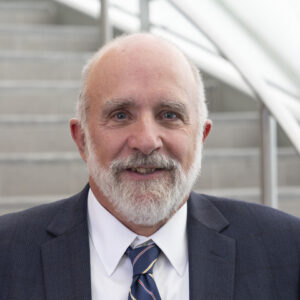 Dr. Bill Dennison is a Professor of Marine Science and Vice President for Science Application for the University of Maryland Center for Environmental Science. Since 2003, has served as Vice President for Science Application and led the Integration and Application Network (IAN), charged to inspire, manage and produce timely syntheses and assessments on key environmental issues with a special emphasis on Chesapeake Bay and its waters. He has published hundreds of papers and books on coastal ecosystem ecology and has presented at international, national, and regional meetings, and at various universities, research institutions, and government agencies. He was a research assistant professor at UMCES’ Horn Point Laboratory from 1987-1992 before spending 10 years at the University of Queensland in Brisbane, Australia, where he developed an active Marine Botany group with strong links to the Healthy Waterways Campaign for Moreton Bay. He rejoined UMCES in 2002 to develop the Integration and Application Network. He holds a Ph.D. in biology from the University of Chicago, a post-doc in coastal marine science from the State University of New York at Stony Brook, an M.S. in biological oceanography from the University of Alaska, and a B.A. in environmental science from Western Michigan University.
Panelists
Don Boesch
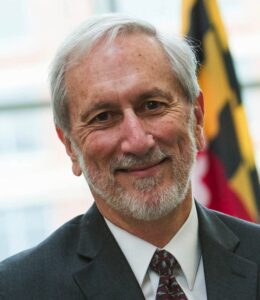 Donald Friedrich Boesch, Ph.D. is President Emeritus and Professor Emeritus at the University of Maryland Center for Environmental Science (UMCES). He spent 47 years of his career studying, researching, teaching, advising and communicating about the Chesapeake Bay, the early part at the Virginia Institute of Marine Science. Don is a co-author of several of the most highly-cited articles on abating eutrophication in the Chesapeake Bay and in coastal ecosystems around the world.
Walt Boynton
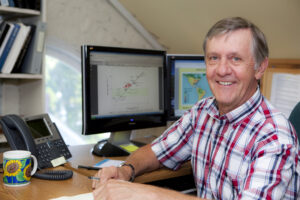
Dr. Boynton is currently emeritus Professor at the University of Maryland Center for Environmental Science (UMCES), Chesapeake Biological Laboratory in Solomons, Maryland.
Dr. Boynton earned his BS degree in biology from Springfield College, MS degree in Marine Science from the University of North Carolina and a PhD degree in Environmental Engineering from the University of Florida. He has been a member of the faculty at the Chesapeake Biological Laboratory since 1975.
Boynton is an estuarine ecologist and has conducted research in the Chesapeake Bay as well the Baltic Sea and Mexican coastal waters. His research interests range from nutrient enrichment of estuarine and coastal waters and the effects this has on water quality, sea grasses and estuarine food webs to issues related to estuarine fish communities. Dr. Boynton has also been active in developing reviews of estuarine processes that are of particular utility to environmental managers.
Boynton has served in a number of professional leadership and advisory roles. He was the co-leader of long-term studies of Chesapeake Bay funded by the National Science Foundation. He was a member of the team that designed and implemented the Chesapeake Bay Monitoring Program, was treasurer and later President of the Estuarine Research Federation, a member of the Patuxent River Commission, received the UMCES President’s award for Excellence in Science Application, shared, with Michael Kemp, the Odum Award for Lifetime Achievement from the Coastal and Estuarine Research Federation (CERF) and more recently received the Mathias Medal from Maryland and Virginia Sea Grant and the Chesapeake Research Consortium, the Ruth Patrick Award from the Association for the Sciences of Limnology and Oceanography (ASLO) and the Carl Weber Award from the Maryland Water Quality Monitoring Council. He currently serves on the board of trustees of the Maryland/DC Chapter of the Nature Conservancy, is an honorary board member for the Alliance for the Chesapeake Bay and recently retired from the board of the American Chestnut Land Trust.
Kurt Stephenson
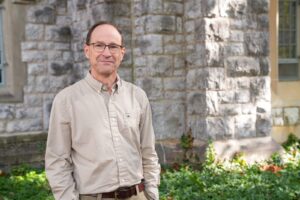 Kurt Stephenson is a professor in the Department of Agricultural and Applied Economics at Virginia Tech, specializing in environmental and natural resource economics. His current research focuses on environmental trading programs, the evaluation of agricultural nonpoint source policies, and the design of payment-for-environmental-services programs. Stephenson co-edited (with Denice Wardrop) the STAC report Achieving Water Quality Goals in the Chesapeake Bay: A Comprehensive Evaluation of System Response (CESR) and co-authored the STAC report Tiered Implementation of the Chesapeake Bay TMDL.
Denice Wardrop
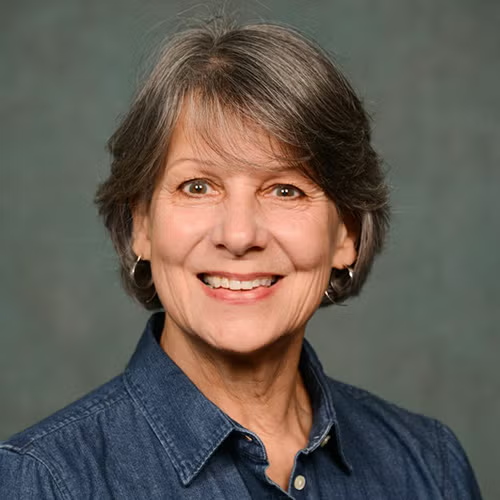 Denice Heller Wardrop was one of the first Systems Engineers to graduate from the University of Virginia, which she followed with an MS in Environmental Sciences from the same institution. She practiced as a consulting environmental engineer for over a decade before moving to State College PA, embracing football as well as basketball, and finishing a PhD in Ecology at Penn State. In addition to her role as former Executive Director of the Chesapeake Research Consortium, she also worked as a Research Professor of Geography and Ecology at Penn State. Her discovery areas are wetlands of all kinds and landscape ecology, and she worked a great deal on how human activities impact the ability of natural systems to provide ecosystem services. Her favorite teaching activity involved escorting multi-disciplinary teams of students to Peru, and helping them unpack the UN Sustainable Development Goals to find a focus to their work. She served on science committees that advise both the Chesapeake Bay and Everglades restoration efforts, and passionately supports humans and aquatic systems finding ways to bring out the best in each other.
Kaylyn Gootman
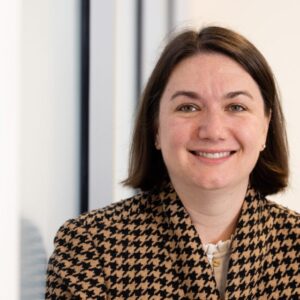 Kaylyn received an undergraduate degree in Environmental Studies from the University of North Carolina at Chapel Hill (UNC) in 2010. She worked for the UNC Institute of Marine Sciences studying tidal freshwater rivers and estuarine environments. In 2011, Kaylyn was hired as an Oak Ridge Institute for Science and Education Postgraduate Researcher with the Environmental Protection Agency (EPA) National Center for Environmental Assessment. She received her Ph.D. in Ecology from UNC in 2019 and completed a post-doctoral fellowship with the West Virginia University Institute of Water Security and Science. Kaylyn re-joined the EPA with the Chesapeake Bay Program Office in 2022 as an Integrated Analysis Coordinator with the Science, Analysis, and Implementation Branch where she direct the efforts of multi-disciplinary teams in the development, maintenance and updating of electronic Chesapeake Bay watershed information; coordinates Chesapeake Bay restoration and protection data analysis and interpretation activities from multiple sources and partners; serves as a technical lead for the development of computerized systems in support of continued integrated analysis of model simulated inputs/outputs of the Chesapeake Bay ecosystem; develops and provides training on a full array of community-based environmental models, data analysis, and diagnostic tools used in the generation of Chesapeake Bay restoration and protection information; and shares scientific information via a variety of communication methods.